
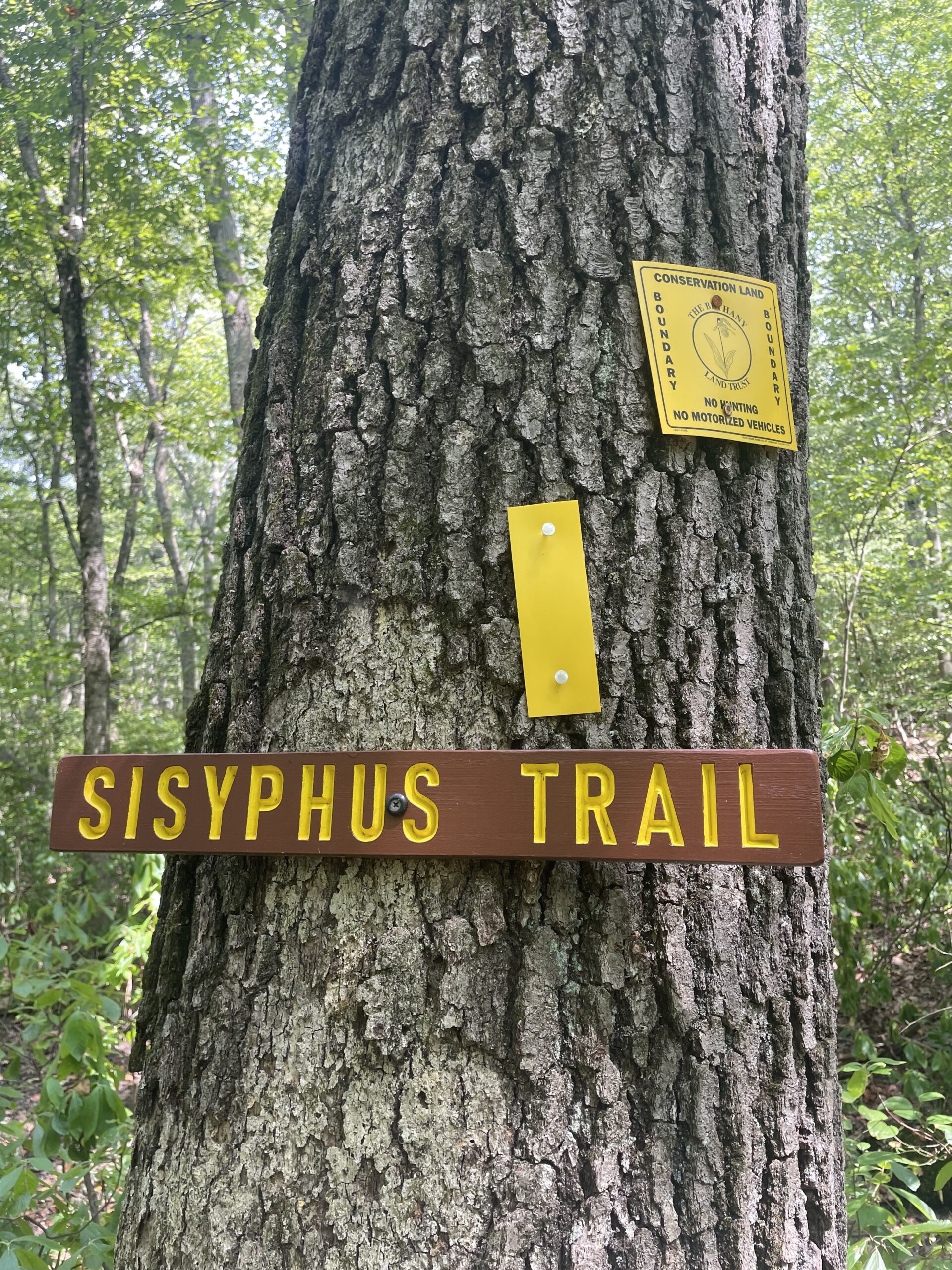
On a recent hike along the Sisyphus Trail in the new Hidden Brook Preserve, I reached the top and was greeted by its most famous feature: a massive boulder, likely left behind thousands of years ago by the retreating glaciers of the last Ice Age. But what caught my attention wasn’t the boulder’s size; it was a tiny birch sapling clinging to its side! Its roots had managed to sprout in the smallest crack in the stone, drawing life from what little soil and moisture had collected in that tiny pocket.
I scratched the young tree’s bark and caught that familiar, wintergreen-like scent of birch; perhaps sweet birch (Betula lenta), a hardy species native to Connecticut. Sweet birch is known for its rich scent, thanks to natural oils containing methyl salicylate, and it can grow in rocky, upland habitats where conditions seem far from ideal. Sweet birch often shows its resilience, taking root wherever a foothold can be found, sometimes thriving for decades in challenging sites where slower-growing hardwoods struggle to establish.
In the height of summer, when Connecticut’s forests are full and green, it’s easy to overlook the quiet determination of plants like this. But that birch on the boulder reminds us of nature’s resilience; essentially, how life finds a foothold in even the most unlikely places. Given time, rain (which seems to be lacking recently), and patience, those tiny roots may continue to grow and split the rock a little more, creating space for mosses, ferns, and eventually, more trees.
Next time you’re on the trail, look closely around you! You may find similar stories of persistence growing from a stone wall, an old stump, or the thin soil on a rocky ridge. Nature doesn’t wait for perfect conditions; it simply makes the most of what’s available. Mid-summer is a perfect time to notice these small but important connections: tiny caterpillars munching away on milkweed leaves, including monarch caterpillars that will mature, transform, and begin their long journey south toward Mexico; spicebush swallowtail caterpillars curled up inside the leaves of spicebush and sassafras, eventually emerging as striking butterflies; and countless other insects, birds, and mammals taking advantage of the season’s abundance. Each of these moments is a reminder that life, in all its forms, adapts, persists, and thrives…often in the most unexpected places.
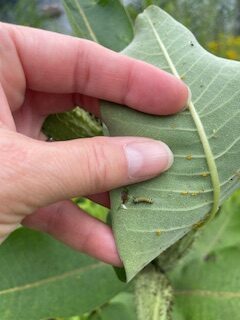
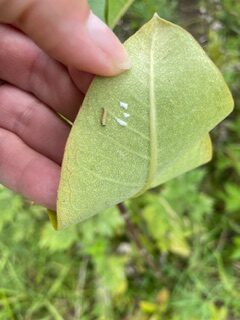
Tiny monarch caterpillar on milkweed in Bethany
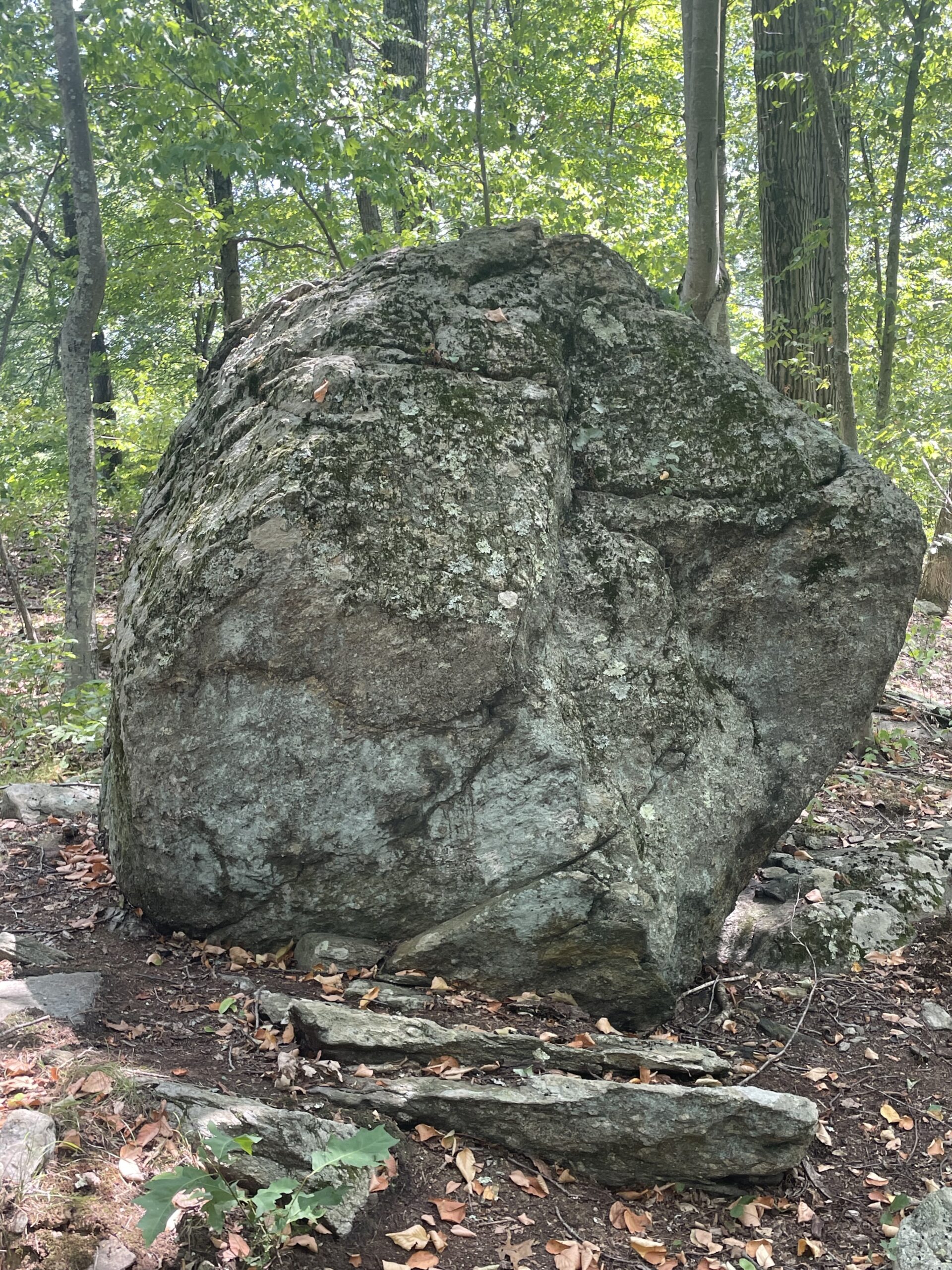
Sisyphus boulder
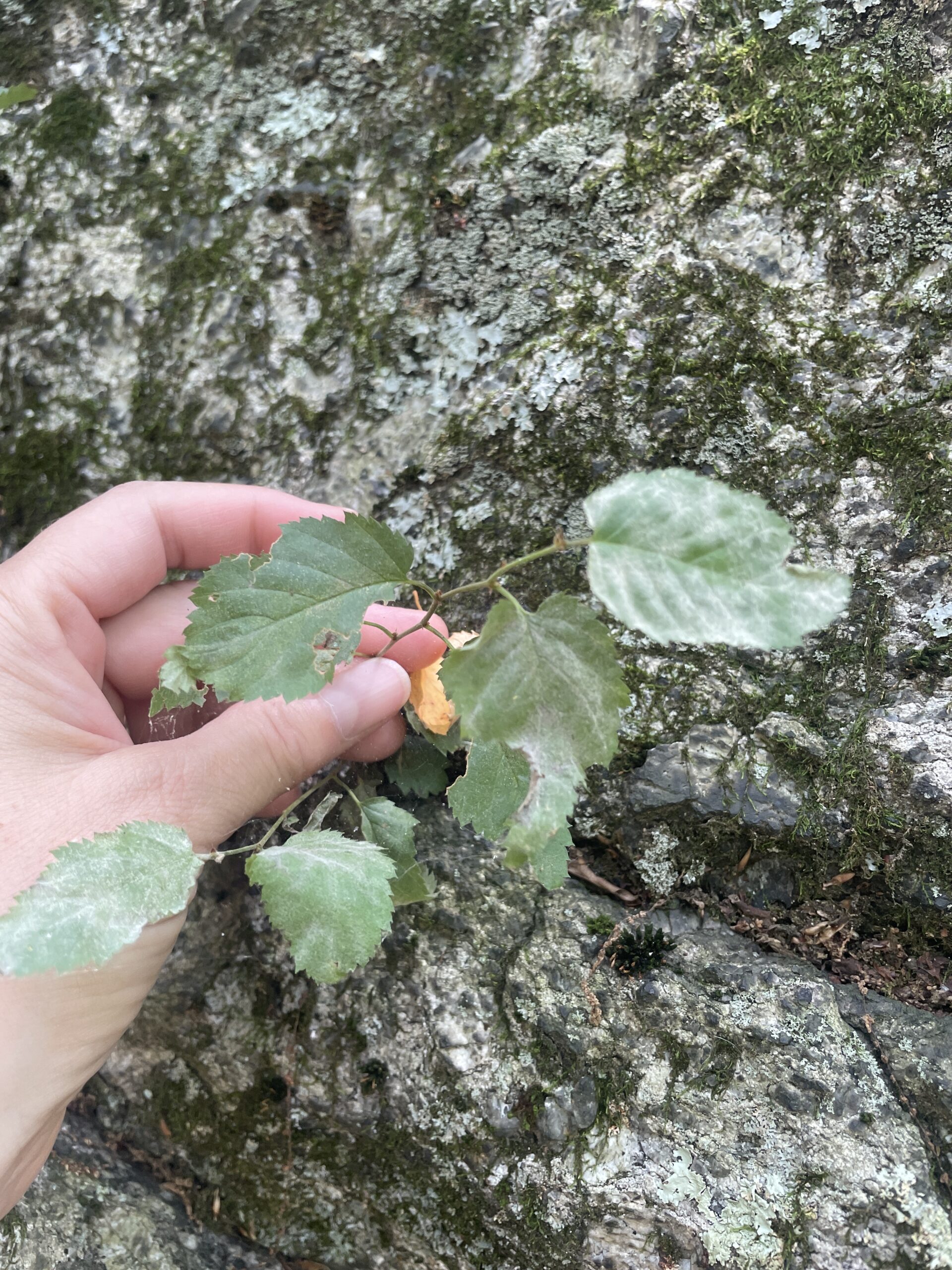
Birch sapling growing out of the boulder
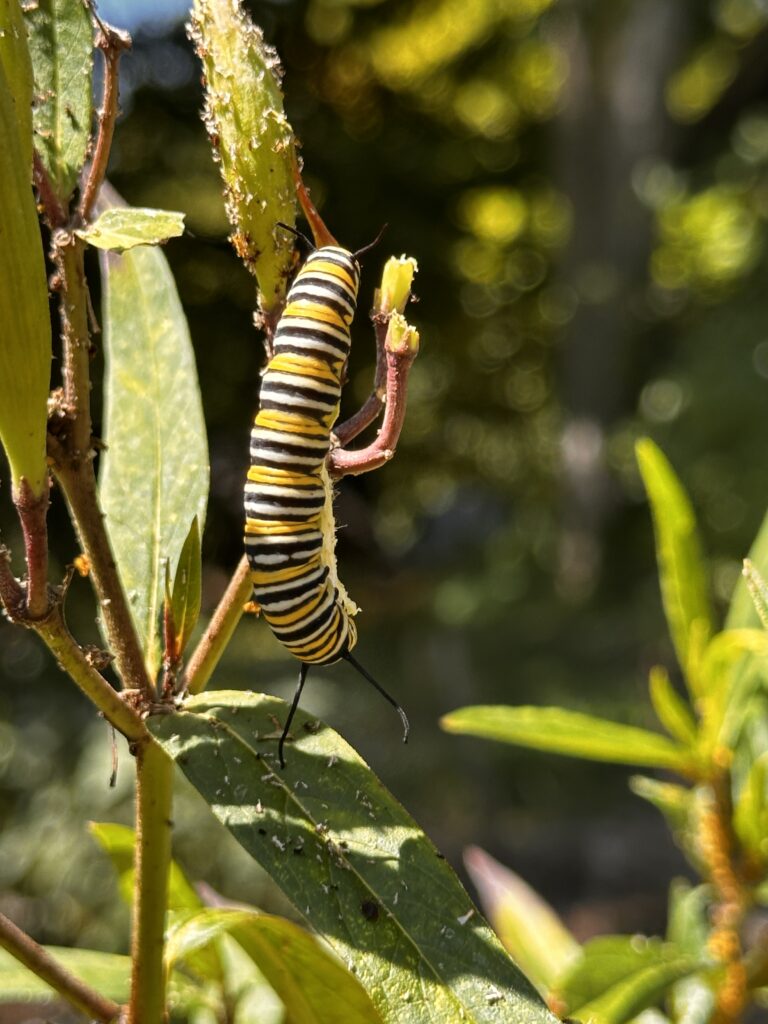
Monarch larvae eating away on Asclepius